Why Your Electric Bill Is Higher Than Expected in Hawaii
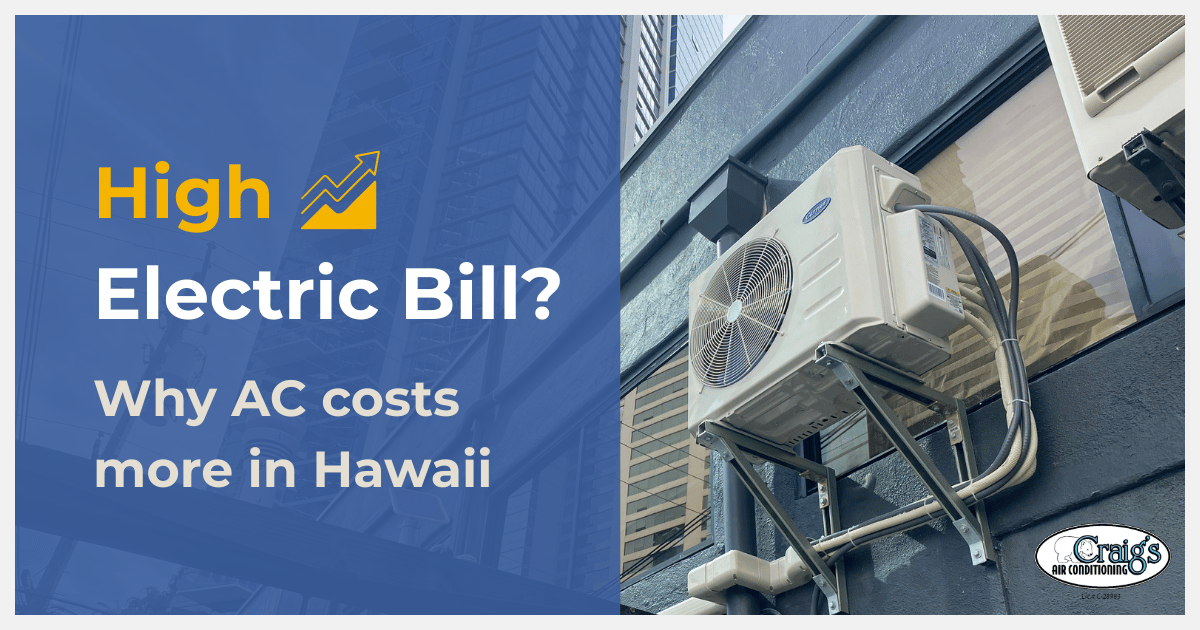
If your electric bill in Hawaii feels higher than expected, you are not alone. In many homes, air conditioning electricity usage can make up half of total energy consumption, even when the system seems to be working normally.
Over the past several years, electricity rates in Hawaii have steadily increased and remain among the highest in the country. When higher rates are combined with AC systems that run often and for long periods, energy use can add up quietly, even when the home feels comfortable.
This guide explains why electricity use increases in Hawaii homes and what you can do to reduce AC related energy costs.
Why Air Conditioning Uses So Much Electricity in Hawaii
Unlike many parts of the country where AC use is seasonal, air conditioning in Hawaii runs more consistently throughout the year. Warm temperatures and high humidity place steady demand on cooling systems, which increases overall electricity use.
Because AC systems operate more frequently, even small efficiency losses or longer run times can have a noticeable impact on energy consumption.
How Humidity Affects AC Use
In Hawaii, air conditioning does more than cool the air. It also removes moisture, which requires additional energy.
Research from the National Renewable Energy Laboratory shows that dehumidification can account for more than half of the energy used by residential air conditioning. In humid climates like Hawaiʻi, this means AC systems often work harder and run longer to manage moisture, even when indoor temperatures feel comfortable.
This added workload helps explain why electricity use can increase without obvious changes in comfort or thermostat settings.
Why AC Systems Run Longer and Use More Power Over Time
Air conditioners rarely become inefficient all at once. In most homes, energy use increases gradually, which makes the change easy to miss.
Common reasons AC systems begin using more electricity include:
Dirty filters that restrict airflow
Dust and buildup on coils that reduce heat transfer
Aging electrical components that operate less efficiently
Reduced airflow that forces the system to run longer
Changes in household use, such as more occupants or added appliances
When these issues develop, the system still cools the home, but it does so by running longer and using more power than it used to.
This is why electric bills can rise even when thermostat settings have not changed.
The Role of Humidity in AC Energy Use
Humidity plays a larger role in energy use than many homeowners realize. In Hawaii, outdoor relative humidity commonly stays in the 65 to 75 percent range, which is significantly higher than in many mainland areas. At these levels, air conditioners must devote a substantial portion of their energy to removing moisture, not just cooling the air.
When humidity is high, an AC system may continue running even after the desired temperature is reached. This increases electricity use without making the space feel noticeably cooler.
Homes with restricted airflow or oversized systems often struggle the most. These systems cool the air quickly but do not run long enough to remove moisture efficiently, leading to frequent cycling, higher energy use, and a home that can feel damp or heavy.
Keeping humidity under control helps reduce runtime and improves both comfort and overall efficiency.
How Electricity Rates Affect AC Costs in Hawaii
Electricity rates in Hawaii have increased steadily over time and remain among the highest in the country. Over the past decade, residential electricity prices have risen by roughly 50 percent, increasing the cost of everyday energy use across the islands.
Today, Hawaii has the most expensive electricity in the nation, with rates that are more than double the national average. Because of this, every additional hour your AC runs costs significantly more than it would elsewhere. Even small increases in runtime or minor efficiency losses can show up quickly on your electric bill.
This is why understanding how your system operates and keeping it efficient matters more in Hawaii than in many other places.
Average Residential Electricity Rates in Hawaii (2020–2024)
| Year | Oahu Average (¢/kWh) | Oahu Year-over-Year % Change | Hawaii Island Average (¢/kWh) | Hawaii Island Year-over-Year % Change |
|---|---|---|---|---|
| 2020 | 26.17 | – | 30.05 | – |
| 2021 | 28.37 | +8.4% | 33.02 | +9.9% |
| 2022 | 39.23 | +38.3% | 43.57 | +31.9% |
| 2023 | 38.54 | -1.8% | 41.08 | -5.7% |
| 2024 | 37.90 | -1.7% | 42.33 | +3.0% |
This table uses Hawaiian Electric’s Schedule R residential rates (cents per kilowatt-hour). Annual averages are calculated by averaging monthly rates for each year (12 months for 2020–2024). Year-over-year percentage changes show how rates have shifted over time.
Practical Ways to Lower Your AC Electric Bill in Hawaii
Lowering your electric bill does not require major upgrades or sacrificing comfort. In many homes, small adjustments and energy-saving habits can reduce AC power use noticeably.
Some of the most effective steps include:
Keep filters clean to maintain proper airflow and prevent the system from working harder than necessary
Make sure vents and returns are not blocked by furniture or clutter
Use ceiling fans to improve comfort so the thermostat can be set slightly higher
Schedule regular maintenance to clean coils, check airflow, and catch efficiency issues early
Address humidity problems early, before longer runtime starts driving up energy use
When combined, these steps help the system cool more efficiently and reduce unnecessary energy consumption.
Rebates, Incentives, and Solar Options in Hawaii
For homeowners looking beyond basic efficiency upgrades, Hawaii offers energy incentive programs that can help offset the cost of improving AC performance. Programs such as Hawaii Energy are designed to reduce long-term electricity use, especially in homes with high cooling demand.
In some cases, pairing AC efficiency improvements with solar energy can further reduce exposure to rising electricity rates. While solar does not reduce how much electricity an AC system uses, it can help offset the cost of that energy when combined with an efficient cooling setup.
Because incentives and solar options vary by island, home type, and system design, efficiency upgrades are best evaluated alongside long-term energy goals.
Saving More with a Clean Energy Ally
As a Hawaii Energy Clean Energy Ally, Craig’s Air Conditioning helps homeowners take advantage of available rebates on qualifying services. Many high-efficiency systems we install are eligible for incentives, helping reduce upfront costs while improving long-term efficiency.
Rebates may be available for:
High-efficiency central air conditioning systems
Ductless mini-split systems
Select maintenance and repair services
Our team can help identify eligible upgrades and guide you through the rebate process so you can make informed decisions about improving comfort and managing energy costs.
Program availability, rebate amounts, and equipment eligibility are subject to change and depend on available funding. Visit hawaiienergy.com for the most current program details.
When High Energy Use Signals a Bigger Issue
Sometimes rising electricity costs point to a problem that needs attention. If higher bills come with uneven cooling, longer runtime, unusual noises, or reduced comfort, it may be time for a professional evaluation.
Catching efficiency issues early can prevent further energy loss and help keep operating costs under control.
Conclusion
High electric bills in Hawaii are often the result of steady AC use combined with rising electricity rates. Because air conditioning accounts for such a large share of household power consumption, even small efficiency changes can have a noticeable impact over time.
With proper maintenance, good airflow, and attention to humidity control, most homeowners can reduce electricity usage while keeping their homes comfortable year round.